Pets
Puppy Chew Power: Choosing the Right Toys for Healthy Teeth

From the moment they arrive home, puppies explore the world with their mouths. Shoes, furniture legs, and even your hands can quickly become tempting targets for tiny teeth. The solution? Chew toys. Being far more than simple playthings, they help soothe teething discomfort, support healthy jaw development, and keep curious young dogs mentally stimulated.
Types to Consider
Say goodbye to chewed-up shoes and hello to a fun and safe puppy chew toy your furry friend will adore. With so many puppy chew toys available, choosing the right ones can feel overwhelming. Many pet retailers organise their collections by material, durability, and intended use, making it easier to find options suited to different breeds and chewing styles.
Rubber Chew Toys
Rubber toys are among the most popular choices for dogs. They are durable yet gentle on developing teeth and gums, making them ideal for daily chewing. Many feature textured surfaces that massage sore gums, while others can be filled with treats or soft food to keep puppies entertained for longer. Some owners also freeze these toys to provide cooling relief during the teething stage.
Rope Toys
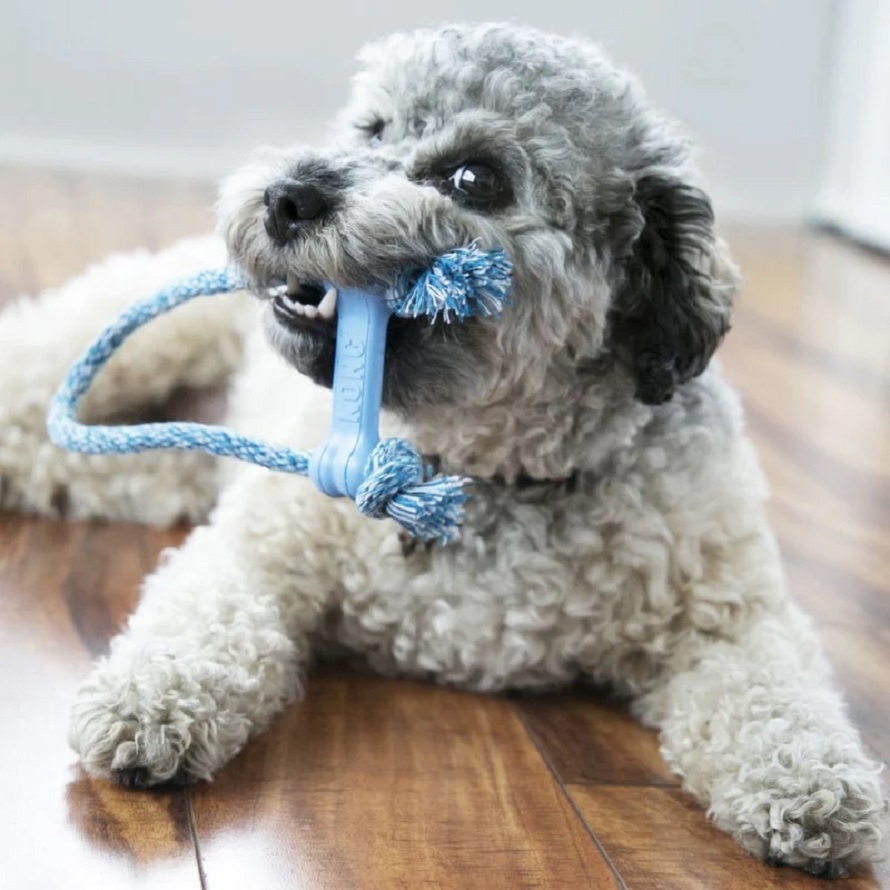
Rope chewing toys for puppies are excellent for canines that enjoy chewing and interactive games such as tug-of-war. The fibres can help remove plaque from teeth as your puppy chews. However, rope options should be inspected regularly and replaced if they begin to fray, as loose strands may be swallowed.
Plush Toys
Soft plush puppy chewing toys offer comfort and gentle chewing for younger dogs. Many include squeakers or crinkly materials that make playtime more engaging. They are especially suitable for puppies that enjoy carrying or cuddling their toys, but are best suited to less aggressive chewers.
Treat-Dispensing Toys
These toys combine chewing with mental stimulation. Puppies must work to release treats hidden inside, which helps reduce boredom and encourages problem-solving. They are particularly useful when you need to keep your furry friend occupied.
Freezable Teething Toys
Designed specifically for teething puppies, these toys can be chilled to soothe inflamed gums. The cold sensation helps reduce discomfort and can provide much-needed relief during periods of intense chewing.
Dental Chew Toys
Dental toys feature ridges, nubs, and textured surfaces that help clean teeth and massage gums. They support oral hygiene while satisfying your puppy’s instinctive urge to chew.
Size Matters
Size is one of the most important factors to consider. A puppy chew toy that is too small can become a choking hazard, while one that is too large may be difficult for your puppy to grip and enjoy. The best toy should fit comfortably in your puppy’s mouth while being large enough that it cannot be swallowed whole.
Small breeds such as Chihuahuas, Pomeranians, and Maltese usually do best with lightweight puppy chewable toys designed for tiny jaws. Medium breeds benefit from slightly larger types that offer a balance of comfort and durability. Large breeds and strong chewers need bigger, sturdier options that can withstand more force without breaking apart.
As a general rule, choose chew toys for puppies based on your dog’s current size rather than their expected adult size, and always follow the manufacturer’s age and weight recommendations. As your puppy grows, replace toys with appropriately sized options to maintain safety and interest.
Match Chewing Strength

source: zachspetshop.com.au
Not all puppies chew with the same intensity. Some gently nibble on their toys, while others attack them with surprising enthusiasm. Choosing a toy suited to your puppy’s chewing strength helps prevent frustration, reduces the risk of pieces breaking off, and ensures it remains safe and engaging as your puppy grows and gains confidence.
- Light chewers typically do well with softer rubber, plush, or flexible teething toys that are easy on developing teeth and gums.
- Moderate chewers, on the other hand, benefit from more resilient materials that offer a satisfying texture without wearing down too quickly.
- Strong chewers, especially larger breeds, need dense rubber or reinforced toys designed to withstand repeated biting and tugging.
Watch how your puppy interacts with their toys. If a toy shows significant damage after only a few play sessions, it may be too soft for your canine’s chewing style. On the other hand, a toy that is excessively hard may be uncomfortable and discourage use.
Age Appropriateness
Age plays a key role in selecting the right chew toys for puppies. Very young puppies are in the teething stage, meaning their gums are sensitive and they need soft, flexible toys that soothe discomfort without causing damage to developing teeth. These early toys should be gentle, lightweight, and easy to grip.
As dogs grow, their chewing habits become stronger and more intentional. At this stage, they benefit from more durable materials that can handle increased bite force while still supporting healthy chewing behaviour. Toys that also offer mental stimulation, such as treat-dispensing options, become especially valuable as energy levels rise. Always check the recommended age range on a toy before purchasing, as this ensures it matches your puppy’s developmental stage.