Lifestyle
How to Choose and Install the Right Marine Stereo

Nothing beats the feeling of being out at sea, with salt spray in the air and waves rolling under the hull. The open water brings freedom, adventure and time to unwind with mates or family. One of the most essential pieces of marine audio equipment, stereos bring music, news or navigation updates right to your boat.
They turn long trips into fun ones and keep the vibe alive during fishing or anchoring. For anyone after user-friendly and reliable marine stereos, quality picks make all the difference on the water.
What to Consider in a Marine Stereo

source: nordkapp-boats.com
Power
Not all stereos work well with every boat setup. Make sure the marine boat stereo you pick matches your power source, whether that’s 12-volt batteries or onboard generators. For smaller tinnies, efficient marine stereos with a low power draw help save battery life during all-day outings. Power output drives speaker performance, too. Look for RMS ratings over peak power claims, as they show real sustain for bass and volume.
Sound Quality
Sound quality matters just as much as the stereo itself. Some marine stereos for boats deliver clear highs and deep bass, while others muddy up in wind or engine noise. Equaliser bands let you tweak for open water or cabin use. For boats with subwoofers, crossovers cut distortion and sharpen output. Clear audio cuts through waves and wakes.
Protection
Protection keeps gear safe from spray and knocks. IPX ratings show water resistance levels on most units. Higher numbers mean better defence against rain or washdowns. Marine boat stereo cases with sealed buttons stop saltwater creep. UV coatings prevent fading from sun exposure.
Resistance
Resistance to heat and cold sets top units apart. Some stereos handle 0°C to 50°C without glitches. Operating range suits Aussie summers or winter getaways. Thermal cut-offs protect circuits from overloads. Humidity resistance fights condensation in cabins. Sealed vents let heat escape without letting moisture in.
Corrosion
Corrosion resistance is a factor worth prioritising, especially on saltwater boats. Many marine stereos for boats use stainless fittings and powder-coated chassis. Anti-corrosion coatings guard against rust in harsh marine air. For brackets or mounts exposed to spray, marine-grade alloys last longer. Gold-plated terminals resist verdigris buildup.
Remote
Remote control adds convenience on deck. Wired remotes tether to the main unit for splash-proof operation. Wireless apps link via Bluetooth for phone control. Stereos with NMEA share controls across screens. You can thus place remotes where the crew can reach without leaving their posts.
Specs
Check specs for future-proofing your setup. FM/AM tuners grab coastal stations clearly. USB ports charge phones while playing files. AUX inputs handle MP3 players or auxiliaries. Look for zone outputs if running multiple areas.
Bluetooth
Bluetooth connects phones or tablets wirelessly. Stable pairing holds through engine starts. aptX support boosts streaming quality. Multi-device pairing switches users seamlessly. Bluetooth also resists dropouts in crowded anchorages as long-range stereos can reach stern speakers from the helm.
DIN

source: nordkapp-boats.com
DIN size fits standard dash cutouts. Single or double DIN slots match console space. Marine stereos for boats in slimline designs squeeze into tight spots. Universal mounting kits adapt to old holes since DIN compliance speeds up swaps from the stock unit.
Multizone
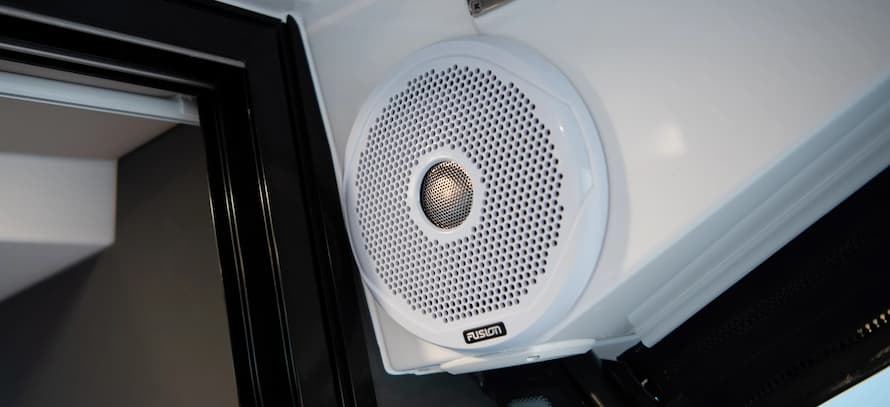
Multizone outputs run separate volumes for cockpit and cabin. Faders balance sound across areas. Stereos with three zones cover the fore, aft and salon.
Controls
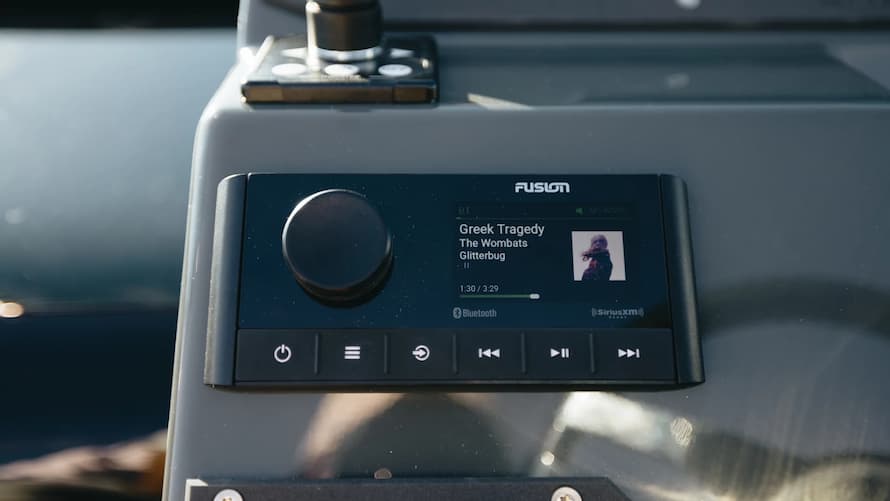
Controls need to feel right in wet hands. Large knobs turn easily with gloves on. Tactile buttons confirm presses in rough seas. Backlit displays read in the sun or in the dark. Waterproof keypads seal out spray and intuitive menus skip deep dives mid-trip.
Boost
Boost features punch up weak signals. Built-in DSP clarifies audio in noise. Equaliser presets optimise for genres. Subsonic filters clean bass rumble. Signal boost maintains volume in chop and dynamic range compression evens loud and soft parts.
How to Install a Marine Stereo
1. Prep starts every good install. Power off the boat and remove the old unit if swapping. Gather tools like wire strippers, crimpers and heat-shrink tubing. Check space for new DIN size and cable runs. Clean console areas for secure mounting.
2. Mount the stereo next. Cut or drill dash holes to specs. Secure with brackets or screws into marine ply. Seal edges with silicone against water. Route power wires to the battery with an inline fuse within 30 centimetres. Make sure to ground the unit to a clean chassis point.
3. Wire speakers and accessories. Match positive and negative leads carefully. Use tinned marine wire for corrosion resistance. Solder or crimp connections tightly. Add heat-shrink over joins. Run antenna or Bluetooth leads away from power cables to cut noise.
4. Attach red to the positive fuse block and black to ground, then connect power last. Double-check polarities before powering up. Test all functions: volume, source switch, zones. Play music at a low level first before you secure any loose wires with ties and cover panels.
5. Tune and seal the unit. Set up the equaliser for the best boat acoustics. Program presets and Bluetooth pairs. Spray test with hose to check seals. Apply anti-corrosion spray to any external metal components.