Industry
Gas Struts 101: Understanding How These Small Springs Do Big Work

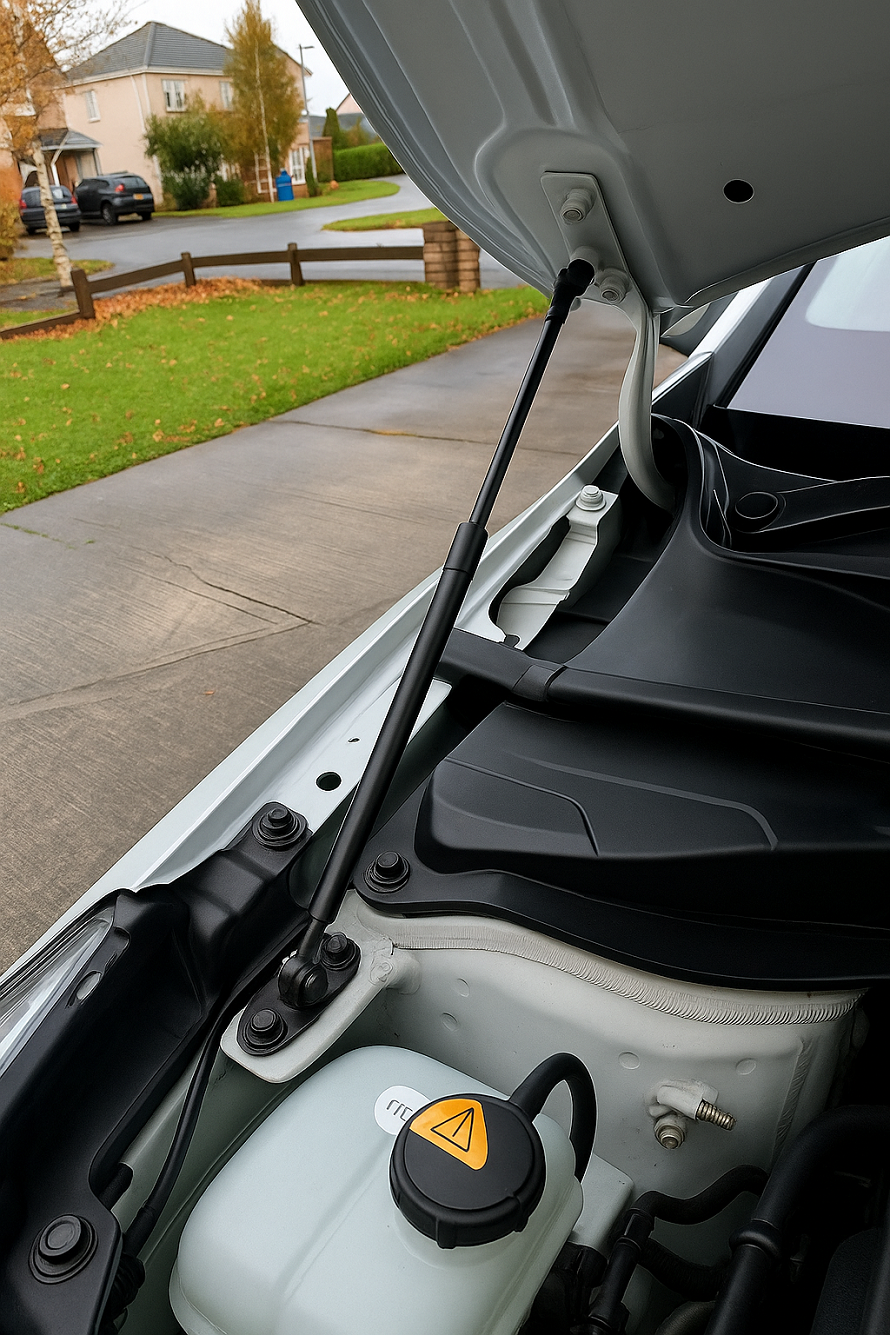
Often it’s the smallest details that carry the most weight. This couldn’t be further from the truth when it comes to gas struts. These simple yet practical lifting mechanisms make opening and closing lids, latches, and doors a simple task, and one in which you won’t break a sweat. This lifting and lowering hardware also provides support and controlled damping for heavier items, including car bonnets, tailgates, kitchen cabinets, chairs, hospital beds and more.
Gas Strut Basics
Also known as gas springs and gas shocks, smooth and reliable struts for gas are mechanical devices designed to provide force in a controlled manner using compressed gas. They consist of a metal cylinder filled with compressed gas (usually nitrogen) and a piston rod that moves within the cylinder. The gas compresses when the piston is pushed into the cylinder. This, in turn, creates pressure that pushes the rod out. Simple and effective, this controlled force makes its way into dozens of applications where smooth and controlled movement is needed.
Parts and How Gas Struts Work
Gas struts consist of sealed outer cylinders, piston rods, sealing components, and oil. The cylinder houses pressurised gas, while the piston regulates gas flow and compression and expansion rates to control movement. Plastic guides and sealing parts guide the piston rod and ensure there are no leaks. They also seal the strut from external contaminants. Inert, pressurised nitrogen gas creates the required spring force, while oil or grease lubricates the seals, providing damping and controlled movement. Steel or Nylon end plugs seal the end of the cylinder, and external fittings or connectors serve as a point of attachment.
The working principle of a strut gas is relatively straightforward. When an external force pushes the rod into the cylinder, the volume of gas decreases, causing it to compress and store energy. As force is released, the gas expands and pushes against the piston rod, causing it to extend. Initially, the piston moves through a gas-filled section of the cylinder, encountering little resistance.
As it nears the oil-filled section, oil is forced through piston orifices (or openings), creating considerable resistance and slowing its movement. Manufacturers can vary compression and damping rates by varying oil viscosity, changing piston orifice size, and modifying piston diameters relative to cylinder size, and thus gas volume.
Main Types and Uses
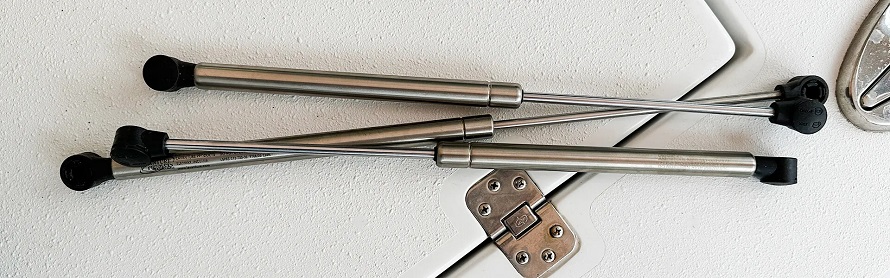
source: boatoutfitters.com
There are several types of gas struts used across numerous applications and industries. They provide support for lifting, lowering, positioning and counterbalancing items to which they are attached. The most common types include:
- Compression gas struts: These are the most common and exert a fixed force. Compression struts are usually seen in lifting, damping and counterbalancing of car bonnets, tailgates, hatch doors and tonneau covers, in RVs and caravans, furniture pieces, including chairs and cabinet doors, industrial and agricultural machinery, toolboxes, panel covers and more.
- Locking gas struts: These differ from compression types in that they can be locked at any point in the compression stroke. This is done by pins at the rod end. There are two types. Rigid gas struts lock the strut at any position along the stroke, while friction-locking gas struts use additional friction mechanisms to hold the strut in place. Common applications are in hospital beds, seats, wheelchairs, height-adjustable tables and sofa beds, where they ensure a fixed position and prevent accidental movement.
- Adjustable gas struts: These can be fine-tuned for force to match specific lifting requirements. They are sold at maximum internal pressure and then degassed as needed. This allows for higher precision in lifting, lowering and holding items of heft. Common uses are in soft-closing lids, doors and panels in boats, aeroplanes and cars, office and dental chairs, operating tables, motorhome roofs and more.
- Damped gas struts: Damped struts ensure controlled movement and smooth lowering and lifting operations. This is provided by pistons with a varied orifice design to alter resistance. The aim is to prevent slamming and damage to lids, panels, doors, and cabinets in car engine bonnets, machinery, aircraft components and boat hatches, among other uses.
Benefits of Using Gas Struts
By providing controlled, precise and predictable movement, struts for gas ensure safety and stability in moving parts. This prevents equipment damage and personal injury. The hardware also provides convenience and a helping hand when safely supporting heavy items, such as car bonnets or machinery parts. This reduces physical strain, especially in repetitive lifting and lowering tasks, ensuring both safety and efficiency. The fact that struts can be customised for force or set at specific locking positions and damping rates also extends their versatility.
The devices are additionally used as space-saving components, providing clean designs in everyday and specialised applications. Moreover, simple yet durable sealed builds mean gas struts are guaranteed to last for years at a time. When setting out to buy gas struts suited to your application, consider the loads the struts need to support, the overall length and piston stroke, and overall build and materials compatible with the intended application. Also consider mounting options, including brackets and end fittings for quick installation and effortless operation.