Automotive
Everything to Know About Performance Exhaust Systems

Exhausts play a vital role in how your car performs. This collection of metal parts is tasked with removing spent gases from the combustion process, reducing pollutants and keeping noise levels tolerable. A well-designed exhaust can also help the engine to improve overall performance and reign in high fuel use.
It’s the cost-cutting measures, however, deployed by car manufacturers to keep overall car prices low where stock systems stumble. The crush bent mild steel seen in factory piping doesn’t last long in spirited driving, being prone to punctures and cracks that lead to reduced engine efficiency brought on by gas leaks. Moreover, the same piping falters at higher temperatures when revving the engine hard, leading to metal fatigue and staining.
The overall designs lead to more worrying. Narrow diameter tubing that slivers under the car in multiple bends comes at the cost of increased backpressure that effectively chokes the engine of its next breath. This is what kills engine performance, and to a large degree engine longevity.
Why Install a Performance Exhaust?
Aftermarket systems aren’t burdened by emissions or noise restrictions and they’re built to a higher standard. This is thanks to the mandrel-bent stainless steel capable of the higher temperatures that come with more power as well as the required strength to keep its dimensional integrity when hitting potholes and road obstacles.
A key difference in a performance exhaust system, however, are the revised designs, with pipes that are at least half an inch wider for more efficient airflow. This is backed up by straighter layouts. Both design solutions help reduce the damaging effect of pooling backpressure in stock systems. And this results in multiple real-world benefits, such as:
- Increased power and backpressure: Wider and straighter layouts relieve engines of increased backpressure, getting spent gases out faster and letting the engine go about its business. This increased efficiency directly increases engine power and torque. As an illustration, full exhausts with aftermarket pipes from the manifold to the tip can generate an additional 10 percent of rated engine power and torque. Vehicles are more responsive to throttle input, accelerate faster, and get more pulling power down earlier on.
- Reduced engine stress: By maintaining heat within the piping, performance exhausts spare the engine of increased temperatures and pressure, specifically in parts like the exhaust valves and cams. This reduces heat-related damage. Another bonus is the cooler atmospheric air coming through the air intakes for healthier, oxygen-rich combustion cycles.
- Durability: High-strength stainless steel with improved heat and corrosion resistance means reduced instances of deformation, metal fatigue and rust. Moreover, a performance exhaust not only lasts longer in everyday driving or when pushed harder on the track, but also looks the part. High-sheen, gloss or chrome finishes are bound to turn heads.
- Sound profiles: Straight-through piping with fewer restrictions means little gets in the way of sound waves generated by combusting gases. Aftermarket exhausts go louder and deeper, belting out a satisfying tune as you work the pedal. The sound can also be tuned with different muffler and resonator combinations, as well as proprietary tech like valving to control air flow and velocity.
- Customisation: Modular performance exhaust system designs mean car owners can opt to replace specific parts or go with pre-assembled and configured systems to get the desired results. Examples include revised downpipes to increase scavenging (the vacuum created by wider piping to draw spent gases out of the combustion chamber), straight-through catalytic converters for improved mid-section flow, or changing muffler profiles when getting the sound you want.
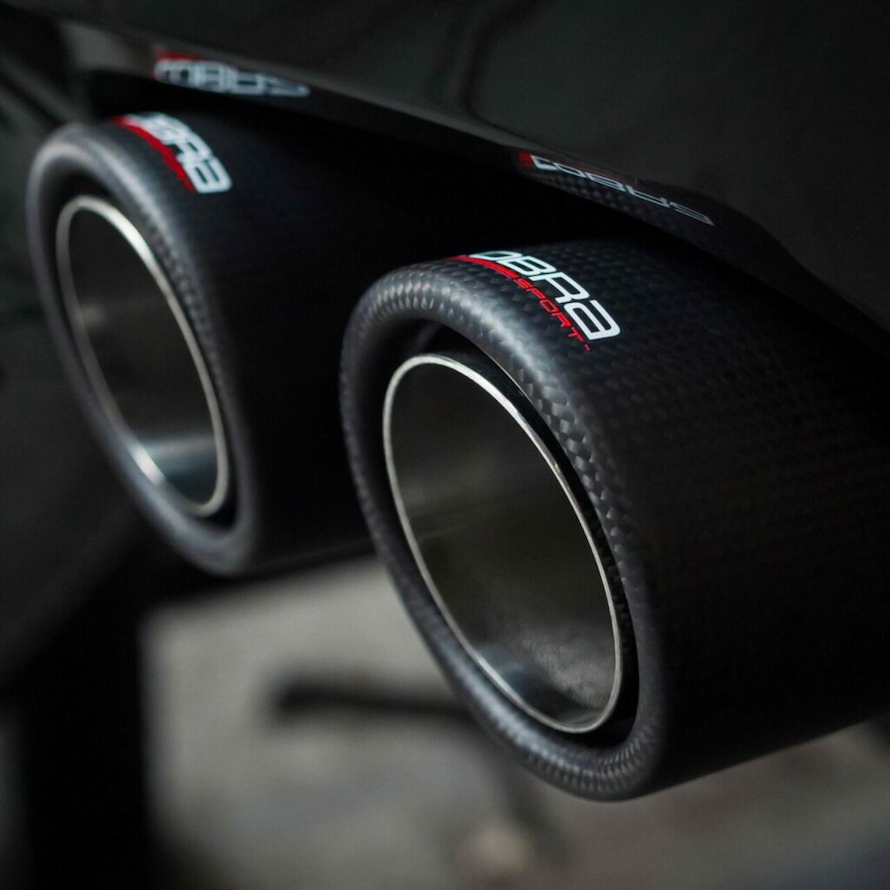
source: blog.demon-tweeks.com
Exhausts Tailored to Your Needs
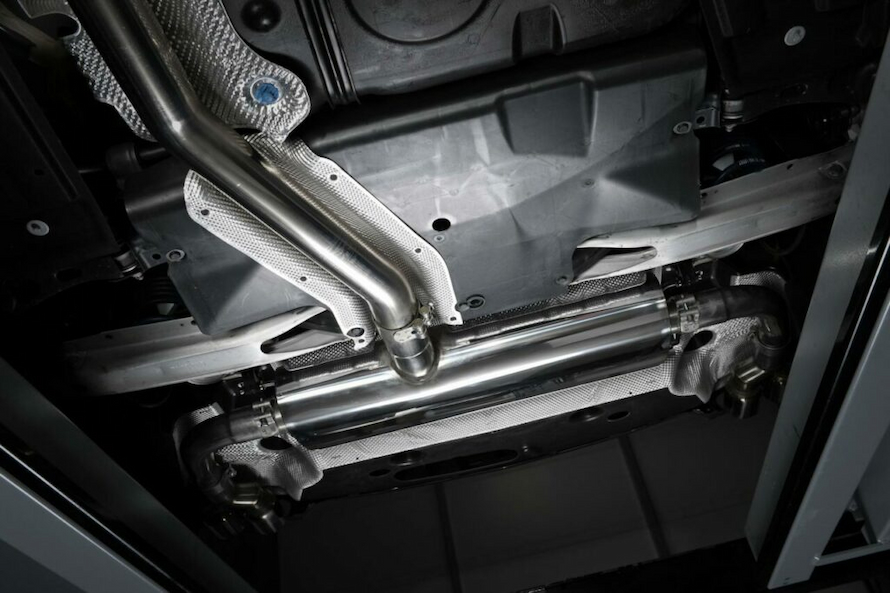
Choose from axle-back systems with new pipes from the rear axle to the tips to get throatier and louder sound; cat-back systems with wider and straighter mid-pipes for improved flow and exhaust velocity (with tangible power gains). You can also get full turbo-back and header-back systems that completely replace your factory exhaust with new piping from the headers and turbo manifold to the tips.
The latter brings all the performance and durability benefits buyers have come to expect, combined with considerably lower weight. In terms of vehicle compatibility, manufacturers have made it easy to get a system that works with your car and engine. Systems differ depending on cylinder count and layout (with single or dual exhausts), whether engines are naturally-aspirated or have forced induction, and whether they run on petrol or diesel.
There are also differences in inlet and outlet positioning to ensure a clean fit and avoid lengthy modifications during installation. Manufacturers also provide compatible mounting hardware for a leak and vibration-free fit. One of the main decisions is choosing the correct pipe diameter. Most factory systems average between 2″ and 2.5″, with larger diameters reserved for larger displacements and higher power outputs.
Most aftermarket exhausts go with 2.5″ pipes (in 4-cylinder and lower power 6-cylinder engines) or wider 3″ piping in turbocharged performance vehicles and cars with high-output 6 and 8-cylinder engines. Going too wide can increase exhaust backpressure and negate the performance gains.
Lastly, consider materials and build. Steel balances durability, performance and affordability. Going higher up the price range with Inconel, titanium and carbon fibre brings distinct looks, improved strength and lower weight. Look for established builders with advanced production facilities and wide product ranges to get the best from your exhaust upgrade.