Sports & Fitness
A Definitive Guide to Different Types of Golf Clubs

Golf is a game of precision, rhythm, and equipment that works with your swing rather than against it. For years, women’s golf gear was defined by the outdated “shrink it and pink it” philosophy, making clubs smaller, lighter, and more colourful without considering the biomechanics of female players. Thankfully, modern engineering has transformed the landscape.
Understanding how club weight, length, and flex influence performance is key. A lighter club can help generate more swing speed, but it must still provide enough stability through impact. The correct shaft flex helps optimise ball flight, while a properly fitted club length ensures consistent contact and posture. Whether you’re browsing women’s golf clubs for sale or refining an existing set, learning the role of each club type will help you build a balanced bag that supports every shot on the course.
The Long Game: Drivers and Fairway Woods

source: golfbestbuy.com
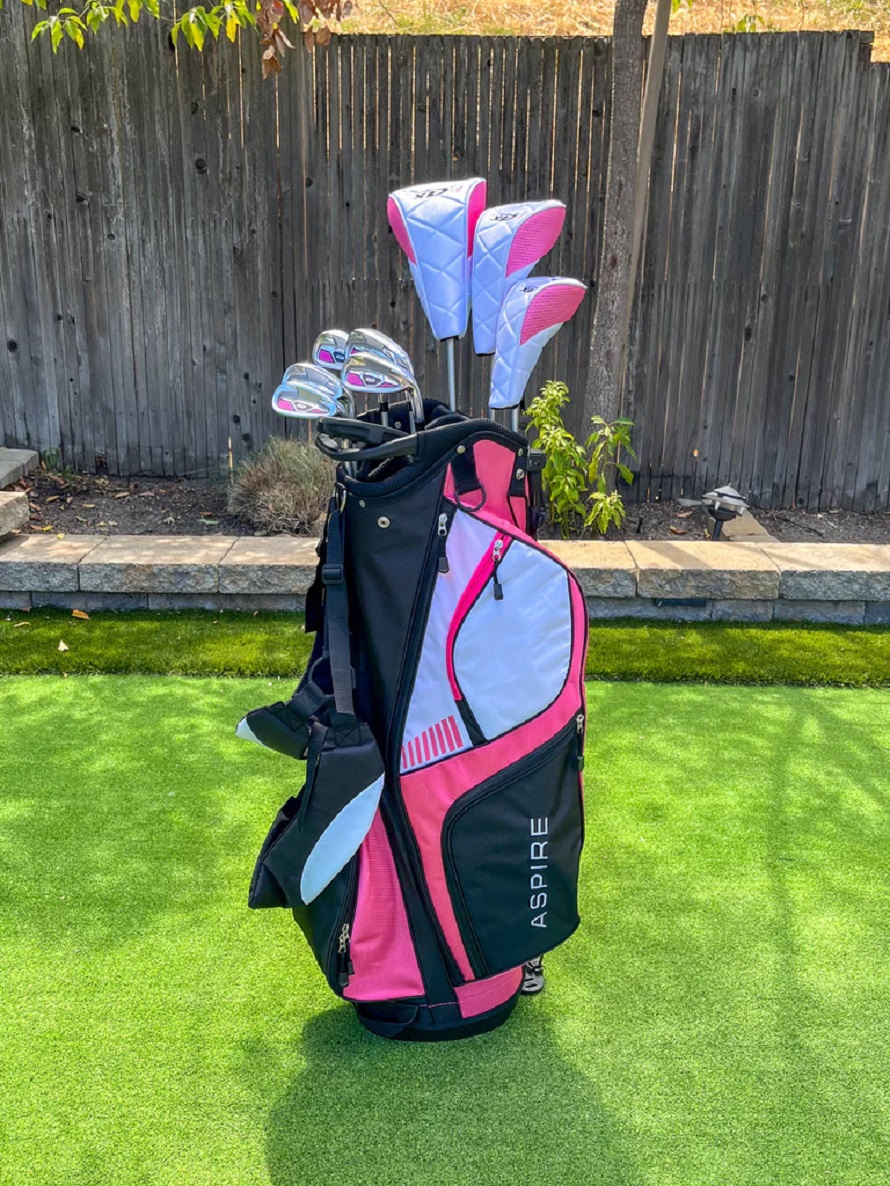
Today’s female golf clubs for optimal performance are designed with data-driven insights into swing speed, launch angle, shaft flex, and overall balance. The driver is your distance engine. Typically, the longest club in the bag, it is designed to maximise clubhead speed and launch the ball high with minimal spin. Modern drivers for women feature lighter graphite shafts, larger sweet spots, and adjustable loft settings to help produce a higher launch and longer carry.
Fairway woods follow closely behind. With slightly shorter shaft lengths, they offer more control while still delivering impressive distance. A 3-wood is ideal for long fairway shots or controlled tee shots, while a 5-wood or 7-wood provides higher launch and softer landings. They are perfect for players with moderate swing speeds. For many golfers, these clubs form the foundation of the long game, bridging the gap between maximum distance and playable consistency.
The Transition: Hybrids
Hybrids are often described as the most forgiving clubs in the bag, and for good reason. They combine the distance potential of fairway woods with the control and versatility of irons.
With shaft lengths typically ranging from 98–103 cm, hybrids are easier to swing than long irons and help get the ball airborne more quickly. This makes them especially valuable for players who struggle with traditional 4- or 5-irons. In many modern sets of ladies’ golf clubs, hybrids replace multiple long irons entirely.
They’re excellent for:
- Long approach shots;
- Escaping light rough;
- Controlled tee shots on shorter par 4s.
If there’s one category that instantly boosts confidence in the long-to-mid range, it’s this one.
The Scoring Zone: Irons
Irons are where precision begins. They’re designed for approach shots, controlled distance, and shaping ball flight into greens. A standard women’s iron set usually runs from a 6-iron through a pitching wedge, with shaft lengths gradually decreasing from about 94 cm to 89 cm. This progressive length helps maintain consistent posture and swing mechanics throughout the set.
Modern golf clubs’ ladies’ sets often feature:
- Perimeter weighting for forgiveness;
- Wider soles for improved turf interaction;
- Lower centres of gravity to help launch the ball higher.
Shorter irons provide more loft and control, making them essential for accurate approaches. These are the clubs that set up birdie opportunities and save pars.
Precision Around the Green: Wedges
Wedges are your scoring tools. They’re designed for high-lofted shots, soft landings, and maximum spin.
The main types include:
- Pitching wedge: Ideal for longer approach shots and bump-and-run chips;
- Sand wedge: Built with extra bounce to glide through bunkers and soft turf;
- Gap wedge: Fills the distance space between pitching and sand wedges;
- Lob wedge: Perfect for high, short shots that stop quickly.
With shaft lengths typically around 86–89 cm, wedges offer exceptional control. The key here is distance gapping, ensuring there’s a consistent distance difference between each wedge so you’re never stuck between two swing lengths. This part of the bag has the biggest impact on lowering scores.
The Money Maker: Putters


source: womensgolfjournal.com
You use your putter more than any other club, making it arguably the most important. While drivers deliver distance, putters deliver results. Women’s putters are often slightly shorter and designed to promote a natural setup with eyes over the ball. The right putter depends on your stroke type:
- Blade putters suit players with a slight arc in their stroke;
- Mallet putters offer more forgiveness and alignment assistance;
- Face technology has also evolved, with inserts that improve feel and promote consistent roll;
- Confidence on the green doesn’t come from force, it comes from fit, alignment, and rhythm.
But the real goal isn’t to chase brand names. It’s to create consistent distance gaps between clubs. If two clubs carry the ball the same distance, one of them is redundant. If there’s a large distance gap, you’re missing a scoring opportunity. This is why custom fitting has become so valuable in the world of female golf clubs. It ensures every club has a purpose and every swing has a solution.
Confidence Through Equipment
The right equipment doesn’t just improve performance – it transforms the way you experience the game. As you explore women’s golf clubs, remember this final tip: focus on the gaps in your bag rather than the logos on the headcovers. A thoughtfully balanced set will always outperform a mismatched collection of premium brands. Because in golf, confidence isn’t just built on the practice range, it’s built into your equipment.