
Automotive
Turbosmart Blow Off Valves: A Performance Upgrade

While turbocharging may be the preferred method of forced air induction in modern automobiles, it can be hugely problematic when a turbo continues to pump pressurised boost air into an engine after the throttle closes. The excess pressure that backs up in the intake tube has to be relieved – even if it has to push its way back through the turbo.
It’s no coincidence, therefore, that almost all of today’s turbocharged engines are equipped with some type of system to either divert or recirculate excess boost pressure before it has a chance to do longterm damage to the turbo. Some systems are better than others though, and Australia’s performance-minded aftermarket specialises in upgraded systems that not only increase turbo longevity, but also improve throttle responsiveness.
Trust Turbosmart BOVs To Deliver the Performance Edge
source: pinterest.com
Let’s be honest: when it comes to turbocharging, it’s not how much boost a turbo produces, but how well the boost is managed. That also includes managing boost air even when the engine throttle isn’t depressed, which is precisely what premium quality blow off valves (BOVs) are engineered to do.
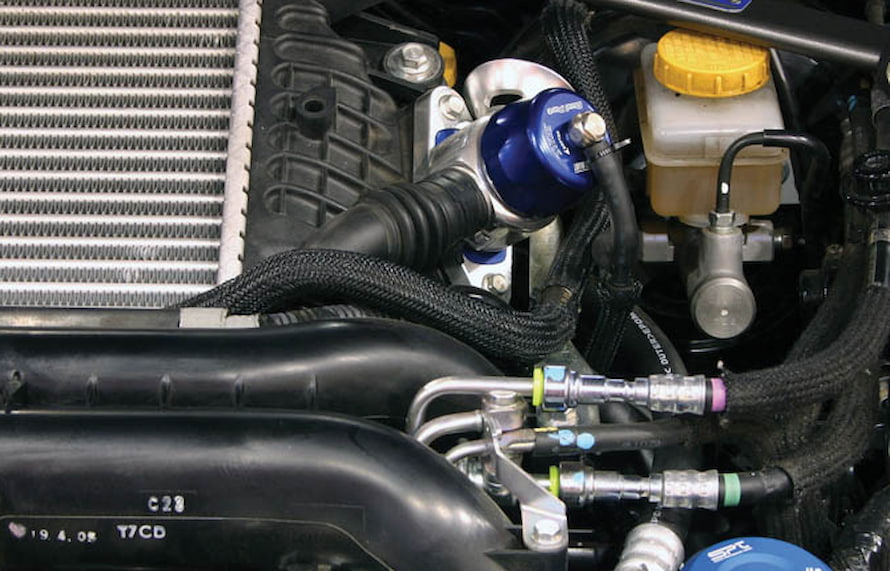
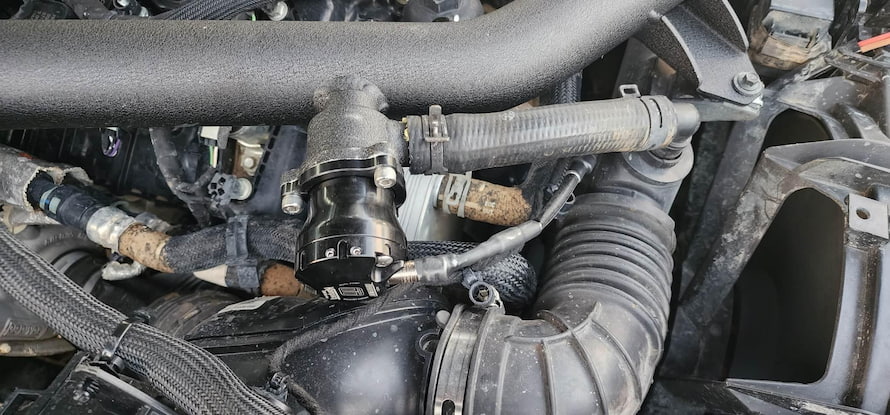
BOVs are mounted on the charging side of the turbo ahead of an engine’s air intake tube, and are responsible for either venting or recirculating boost air that’s produced after the throttle is released. It’s a simple, response-actuated process that relies on prompts from the intake manifold to regulate how the valve opens and closes, and they’re manufactured in three configurations:
- Atmospheric release BOVs. Dual port atmospheric blow off valve units are designed to release pressurised boost air into the atmosphere when the throttle closes. They’re easily recognised by their “whoosh” sound and quick response to boost build-ups, but can also cause engines to momentarily run rich after the throttle is released.
- Recirculating BOVs. Recirculating blow off valves are commonly call bypass valves (BPVs) and are designed to direct boost air back to the intake side of the turbo. BPVs are quiet and aren’t prone to running rich, but they don’t respond as quickly to throttle release as atmospheric release BOVs.
- Adjustable pressure BOVs. Adjustable car blow off valve units are atmospheric release BOVs with opening and closing rates that can be manually adjusted; they’re completely free of ECU signalisation. Their emissions and noise levels aren’t regulated though, which is why these units are intended strictly for off-road use in Australia.
For turbo enthusiasts, it’s noteworthy to remember that factory-installed BOVs are purposely designed to deliver the best compromise of compliance and drivability for the widest range of driving conditions. Upgraded BOVs like the units from NSW’s Turbosmart, however, are designed for more than just ordinary driving conditions.
With over 30 years in the business of aftermarket turbo design, they understand that compliance, drivability and ultimately reliability aren’t points to compromise on. They all fall under the category of performance, and Turbosmart BOV/BPV units are engineered to outperform all others.
Real World Boost Management Benefits From Upgraded BOVs
There’s no shortage of advantages that go with installing an aftermarket BOV. The BOVs contribution to improved performance comes entirely from its superior management of excess boost pressure, the benefits of which include:
- Increased throttle responsiveness. Turbosmart blow off valves for sale are designed to release excess boost pressure up to 150RPM faster than their OE equivalents, helping reduce compressor surge while also allowing for quicker boost recovery when the throttle is closed.
- Better leak prevention. Turbosmart’s patented “boost-balance” technology ensures harder seating of the BOV’s piston under load, with faster turbo respooling times and more consistent performance when the throttle is open.
- Improved turbo protection. Turbosmart car BOV units are manufactured from tough billet aluminium and other high quality alloys, allowing them to safely and reliably operate with higher turbo boost pressures.
Make no mistake: while Turbosmart BOVs are designed specifically for upgraded turbocharged engines in mind, their core benefits guarantee them to be as efficient for weekday commutes on a factory tune as they for turbo-mapped track duties on weekends.
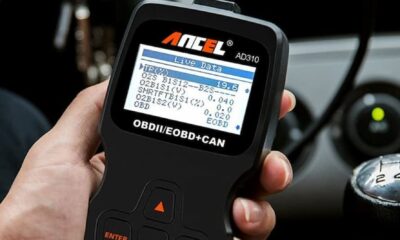
It’s especially important on a factory tune, however, for drivers to be able to recognise if their BOV isn’t functioning properly. OBD2 fault codes can’t pinpoint BOV problems directly, and being able to identify the possible root cause of a malfunction could be the key to knowing when it’s time to replace a car’s OE BOV.
Recognising the Signs Of Imminent BOV Failure
Before deciding to buying a new BOV, it’s essential for drivers to understand how these valves actually work. Either manifold vacuum pressure or electronic signalisation from the intake notifies the BOV when the throttle is open or closed, prompting the unit to either vent excess boost air or to seal itself closed.
If the BOV isn’t leaking and the engine is receiving the maximum amount of boost, it’s safe to say the unit is functioning as intended. Even small deviations that might prevent the BOV from opening or closing as quickly or as frequently as designed would indicate a malfunction though, and the symptoms of which would be unmistakeable:
- Compressor surging/fluttering. If a malfunction prevents the BOV from opening when the throttle closes, air flowing toward the intake will reverse direction and surge back into the turbo. The result is a fluttering sound that’s instantly audible through the turbo after the throttle is released.
- Low power/no power. A noticeable lack of power, together with an obvious loss of boost pressure on the boost gauge, are clear indications of either a vacuum leak from the manifold, or a ruptured diaphragm or a sticking spring in the BOV.
- Uncommonly rough idling and stalling. The combination of rough idling and random stalling are indicative of a pressure leak from the BOV. The turbo’s inability to produce sufficient boost can be traced to the BOV being out of adjustment or a sticking spring preventing it from closing.
- BOV boost hissing. Persistent hissing from the BOV, particularly during acceleration, is an indicator that the valve is leaking boost pressure. And as is the case with rough idling and stalling, the cause is attributable to the valve being out of adjustment or still stuck open.
- Black smoke and backfiring. Black smoke and backfiring are ordinary signs of an engine running rich. On a turbocharged engine, however, these typically indicate that the BOV is stuck open, with incorrect airflow causing the engine to run exceedingly rich.
It’s crucial to bear in mind that while a faulty BOV isn’t a direct danger to the turbo or the engine, phenomena like compressor surge can place undue stress on turbo bearings. Likewise, any situation that results in rich running is a guaranteed source of heat stress that can also drastically shorten a turbo’s lifespan.
A boost leak test using compressed air or a smoke machine is the most conclusive way to confirm whether a BOV is close to imminent failure or not. By connecting an air source to the intake side of the turbo and pressurising the intake tube, any sound of air escaping from the BOV would be verification that the valve is faulty. Replacement is unavoidable at this point; and fortunately, Turbosmart can be counted on for a suitable, high quality upgrade of blow off valves for every application.
The Final Word
At the end of the day, with so many working parts making up a turbocharged system, identifying a fault in any single component can be difficult. There’s one component, however, whose fault symptoms aren’t just impossible to ignore. They’re also impossible to confuse with any other component.
A faulty BOV can bring even the mightiest turbo to its knees, which is why upgrading to premium quality valves is a smart investment. Turbosmart makes the best BOVs in Australia, because they’re engineered to deliver the longevity and responsiveness that enthusiasts expect from their turbos.