
Pets
Pet Care 101: How to Choose the Right Bed for Your Puppy

Bringing a puppy home is an exciting decision every person should make at least once in their lifetime. The cuddly, fluffy ball of joy is every man’s best friend. However, a puppy’s cuteness tends to present as a distraction from the long list of responsibilities you get when you become a new pet owner. From food to hygiene products, a dog has just as many needs as a human.
One of the first things you must get before you bring your new puppy home is their own dog bed. An area set aside for sleeping makes it easier and quicker for young puppies to get used to their new surroundings.
Dog beds are a versatile item. The many shapes, sizes, and materials can be overwhelming to pet owners. Moreover, animals tend to be particular about the space where they sleep and rest. Before you buy dog beds for your first pets, you need to familiarise yourself with their versatility and styles.
Where Should My Dog Sleep at Night?
source: healthline.com
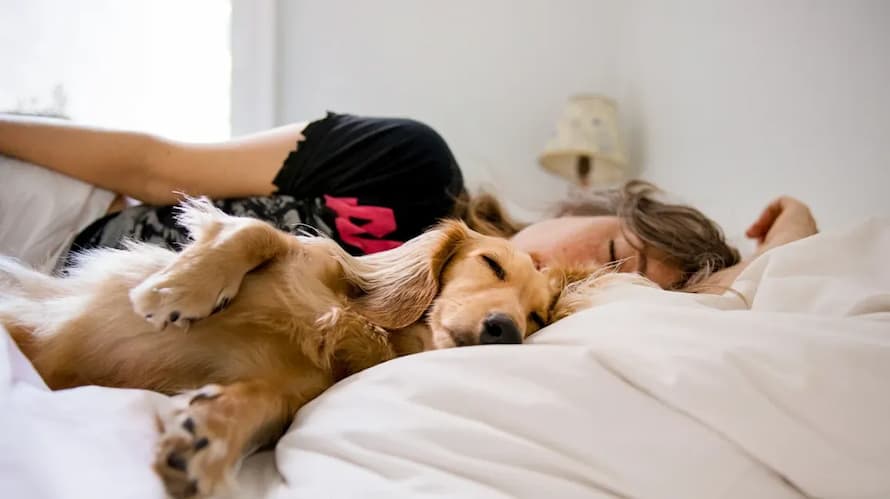
Where your dog sleeps might not seem like a big deal at first. But soon you’ll notice that how they sleep and in which environment can play a large role in their behavioural development. The ideal sleeping space for your furry friend depends not only on their size, but also on their breed and age.
For younger puppies, it may be best to let them sleep beside you in your bed for at least the first couple of weeks. Cosleeping fosters an inseparable bond between owners and their dogs. It can reduce anxiety in both pets and humans, providing a sense of safety when you are together. However, some dogs can become codependent on their owners if they spend every second glued to them. Cosleeping can also pose a risk to your health and hygiene, particularly if you own a long-haired dog.
Some dogs, especially larger ones with long, thick fur, enjoy sleeping on the floor. As the floorboards are much cooler than a plush bed, they help regulate their body temperature, particularly during the warmer months.
Possibly the best place a dog can sleep is in their own dog bed. Dogs thrive on having a certain dedicated space where they sleep. A high-quality dog bed, designed with your dog’s size in mind, has the necessary qualities to support their physical and emotional health. Dog beds come in a wide range of sizes and styles. They are made from easy-to-clean and antibacterial materials that keep your house hygienic, even with dog fur flying everywhere.
The Different Dog Beds to Choose From
source: superiorpetgoods.com.au
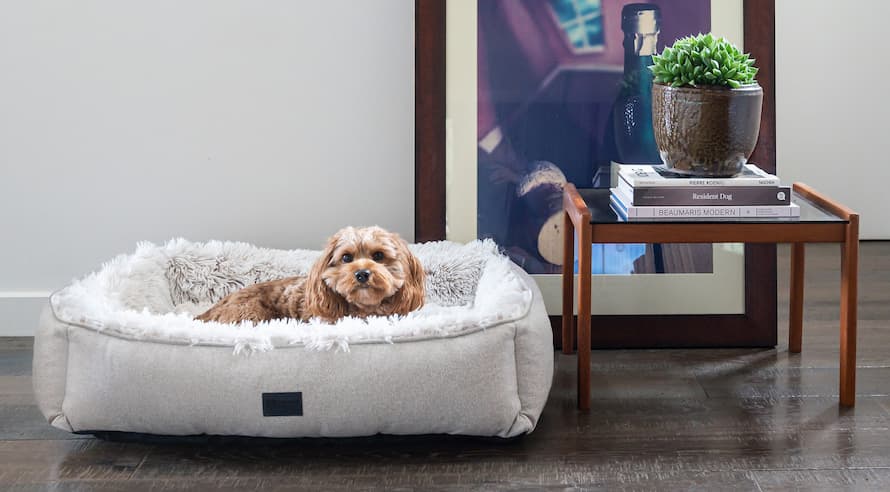
Dog beds aren’t one size fits all. Just like you have your preferences on the softness of your mattress or the fluffiness of your pillow, your dogs have their own preferences as well. Dogs sleep about 12 to 14 hours a day, so they must be comfortable and content in their sleeping space.
Before you buy dog beds, there are three general characteristics you should consider!
1) Types
Beds are versatile items. From design to height to fabric, beds are highly customisable and subjective spaces for dogs, just as they are for humans.
- Orthopedic beds: These beds are made from soft memory foam, meant to support more senior dogs’ bones and joints. They can also help support your dog’s head, creating a more comfortable sleeping experience.
- Elevated beds: These beds are shaped like a human bed, elevated from the ground by four bedposts. This design helps dogs stay cool in the summer and ensures they have a wider field of view than just a view of the floor.
- Heated beds: These beds are perfect for the wintertime or for all-year round for dogs with shorter fur. Heated beds have built-in heaters that provide extra warmth for your dog.
- Cave beds: These beds are great for dogs who like to hide and burrow. They add a touch of privacy to your dog’s sleeping area by having blankets or a cloth attached to all sides and joined in the middle by a wire, creating a cave-like appearance.
2) Size
Dog bed sizes vary based on the size of your dog. Avoid getting your dog a bed before you first bring them home, as you have no idea how big or small your pup will be. Afterwards, measure your dog from head to tail. Buy dog beds that are slightly bigger than your dogs, so they can freely stretch out when they sleep.
3) Material Composition
source: kazoo.com.au
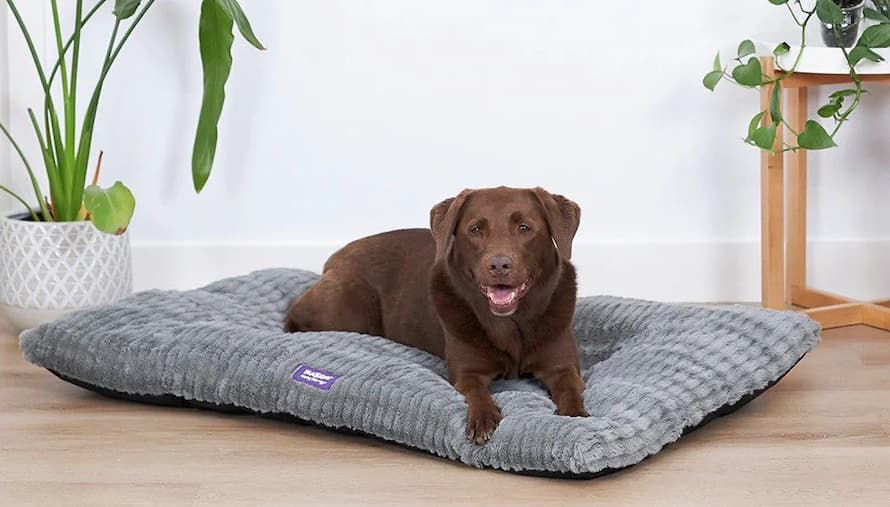
The material composition of your dog’s bed is the deal breaker in a lot of situations. Dogs have sensitivities and allergies as well. For that, the wrong dog bed material can irritate them and make them uncomfortable.
The most common dog bed materials are:
- Fleece: Super soft and comfortable. Most dogs enjoy soft beds in which they can bury their paws. The downside of these types of beds is that they are hard to clean and easily attract fur.
- Cotton: Lightweight and soft, cotton is most often used for covers, not the entire bed, as it isn’t the most durable material, but it provides a layer of breathability to your dog’s bed.
- Microfibre: The top choice for dog beds. They are known for their durability and comfort. They are easy to clean and don’t attract fur and odours as easily as other materials.
- Canvas: Most commonly found in outdoor beds, canvas fabrics are more durable and waterproof than most materials. They are great for warmer climates and can help furrier dogs cool down in the summer.
How to Clean and Maintain a Dog Bed
A clean bed can extend your dog’s life. Washing and properly maintaining dog beds helps remove pungent odours and keeps bacteria and parasites far away from your dog’s fur.
Washing your dog’s bed regularly can help increase the durability of the bed and remove funky buildup of dog fur, oils, and saliva.
Although there is no strict timelines for bed washing, you should follow, it’s recommended to wash your dog’s bed at least once a week to keep the bacteria far, far away. This recommendation may vary based on the bed’s material composition, the frequency your dog sleeps in the bed, or how much your dog’s fur sheds.
Some dog beds can be washed in your machine, and some can only tolerate hand-washing. Read the instruction manual before you do any type of cleaning.
If it’s safe to wash in your machine, then that significantly simplifies your job. Remove any hair before throwing it in, as pet fur can get stuck and clog your machine. When you put it in the washing machine, don’t use any scented detergent. Use a scentless, pet-friendly detergent, or if the bed is extremely dirty, there is about 300ml of white vinegar and some bicarbonate of soda to remove oils and odours.
If you wash your dog’s bed by hand, avoid washing it in the sink so you don’t spread any bacteria in a space where you perform your hygiene tasks. Wash it with some soapy water using a pet-friendly detergent.
Conclusion
Dogs are every man’s best friend, and you need to treat them that way. Feed your dog regularly, attend to their hygienic needs, and, most importantly, make them feel safe in their new home. Whether your dog sleeps in your bed, on the floor, or in their own puppy bed, ensure they are comfortable and content with their sleeping situation. Be patient, your dog might not like its first bed, but trial and error is always the way to go; you will eventually find a bed that checks all their wants, providing a fulfilling night of sleep.