In the world of bathroom furniture, vanities often take centre stage. Blending style and practical storage space, these units enhance the usability of your personal space while elevating its overall look. If you decide to add one to your bathroom, besides style, size is one of the first things to consider. The perfect match should fit the space available and meet your storage needs.
Bathroom vanity units are available in a wide range of sizes, from compact models suitable for smaller bathrooms to generous double-sink designs ideal for shared spaces.
Find the Ideal Vanity Size
source: fontaineind.com.au
Those fortunate with roomy bathrooms can go big with 1800 mm vanities. These larger models often feature a double-basin design, giving couples or families plenty of space to get ready side by side. Visually, they make a bold statement, often coming in sleek freestanding styles or elegant wall-mounted options.
Downsized bathrooms are the perfect candidates for compact and streamlined 600 mm designs that do the job without crowding the space. These single cabinet units (though some designs come with one or two drawers instead) provide enough room for daily essentials while keeping the layout clean and uncluttered.
Bathrooms that fall in between can benefit from a standard bathroom vanity 900mm in size. Many homeowners opt for the bathroom vanity 900mm size because it offers a good balance of storage space while remaining compact enough for standard-size bathrooms, which are neither particularly large (like master en-suites) nor especially compact (like powder rooms or guest bathrooms).
A standard vanity unit is the perfect middle ground. It can store most of your daily toiletries without overwhelming the room. These essentials can be organised in drawers or cabinets to keep everything in place yet out of sight. Some designs may also include open shelving or extra compartments to maximise storage.
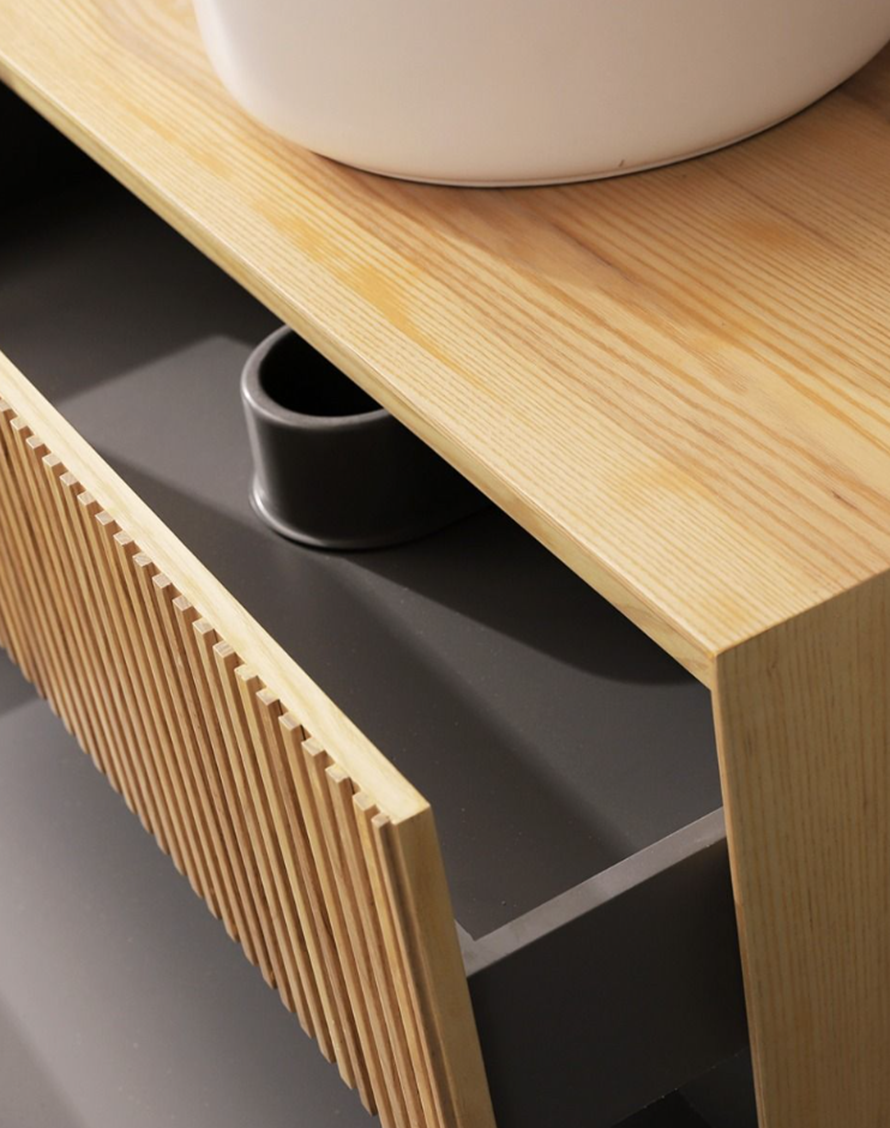
Style-wise, some feature clean lines and minimalist designs, while others come with subtle grooves or detailing that add a touch of texture and personality. Fluted vanity fronts, in particular, are a big bathroom furniture trend right now. With their softly ridged surfaces, they bring depth and visual interest to the space, creating a look that feels both modern yet timeless.
Like many vanity units, 900mm models come in both wall-hung and freestanding styles to suit different layouts. A 900mm freestanding vanity is a timeless choice that suits almost any bathroom. A wall-mounted model, on the other hand, can create an open and airy feel in the space. Without a bulky base to navigate, wall-mounted cabinets also make cleaning easier.
So, if you’re in the process of redesigning your bathroom or thinking about it, the offer is vast and pretty versatile in terms of sizes and designs. There are great options for both smaller and larger bathrooms. Scrolling through all the bathroom models online or walking through the showroom can open a world of possibilities. However, first, it all comes down to measuring the available space. Too big, and your bathroom feels cramped. Too small, and storage is a nightmare.
Measure the Available Bathroom Space
Whether you’re choosing this popular vanity size or need something else, it’s important to have precise measurements of your bathroom. Accurate measurements will help ensure the model you’ve set your sights on fits perfectly in the available space without overcrowding or obstructing other elements, like towel racks, light switches, electrical outlets, and bathroom doors.
You want to start by measuring the width, height, and depth of the area where you plan to install the vanity. Also, take note of door swings or any potential obstructions, and consider the distance from the floor to make sure the cabinet is positioned comfortably for everyday use.
To take proper measurements of the available space, you’ll need measuring tape and possibly an extra set of hands to assist you, especially when measuring longer distances or holding measurements steady.
First, start by measuring the full width of the wall where the vanity will go. This is the distance from one side of the wall to the other, taking into account any surrounding fixtures. Then, measure the height from the floor to the ceiling, as well as from the floor to any potential obstructions like light fittings.
Next, measure the height from the floor to the ceiling or from the floor to any obstructions such as light fixtures. Also, measure the distance from the top of the vanity to the ceiling or any nearby obstruction. This space is important to ensure that the cabinets or mirrors installed above will fit comfortably without being too high or too low.
Still, if tackling it yourself feels tricky, a professional bathroom designer, installer, or furniture specialist can save you the time and hassle. With their experience and eye for detail, they can help you find the perfect vanity size that fits seamlessly into your layout while leaving enough room to move comfortably.